
ARTICLES
Pre-Surgical Physical Therapy in Patients Undergoing Total Knee Replacement
Total Knee Arthroplasty (TKA) is the preferred treatment for patients with end-stage knee osteoarthritis (OA), inflammatory arthritis, or osteonecrosis when pain and functional disability persist despite conservative treatments. Preoperative pain levels, physical fitness, and impairments are strong predictors of knee function after TKA. Better preoperative knee function and fitness contribute to a smoother and faster postoperative recovery.
Patients are often referred to physical therapy before surgery to complete pre-surgical rehabilitation aimed at reducing limitations and improving range of motion (ROM) and strength, which can enhance outcomes after surgery.
A systematic review examining the effects of pre-surgical rehabilitation found the following benefits in the preoperative period across eight trials:
- Strength improvements in 75% of studies
- Enhanced performance in functional tasks such as the Timed Up and Go (TUG) and Sit-to-Stand (STS) tests in 66%
- Increased range of motion in 50%
- Reduced pain levels in 66%
- Improved health-related quality of life (HRQOL) in 33%
No significant changes were noted in stair climbing or walking tests preoperatively. Postoperatively, six trials reported favorable short-term effects on knee function:
- One trial showed significant strength gains
- Two trials showed improvements in TUG and ROM
- One trial noted HRQOL improvements
- Two trials demonstrated reduced pain levels
These benefits were observed up to three months after TKA, supporting improved recovery. While these short- and mid-term benefits are promising, evidence on long-term maintenance remains limited and of low to very low certainty.
Both clinicians and patients may consider prehabilitation as a valuable strategy to enhance short- and mid-term recovery following total knee replacement.
Reference:
Granicher, Pascale, et al. Prehabilitation Improves Knee Functioning Before and Within the First Year After Total Knee Arthroplasty: A Systematic Review with Meta-analysis. Journal of Orthopaedic and Sports Physical Therapy, Vol. 52, No. 11, 2022.
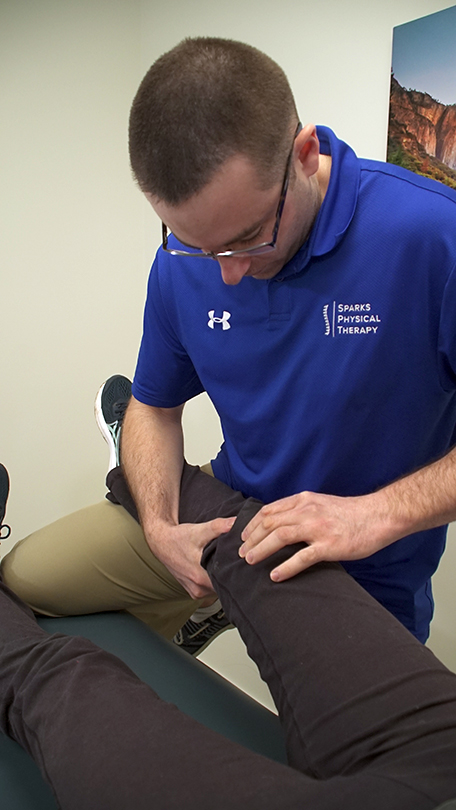
Physical therapist performing knee mobilizations.
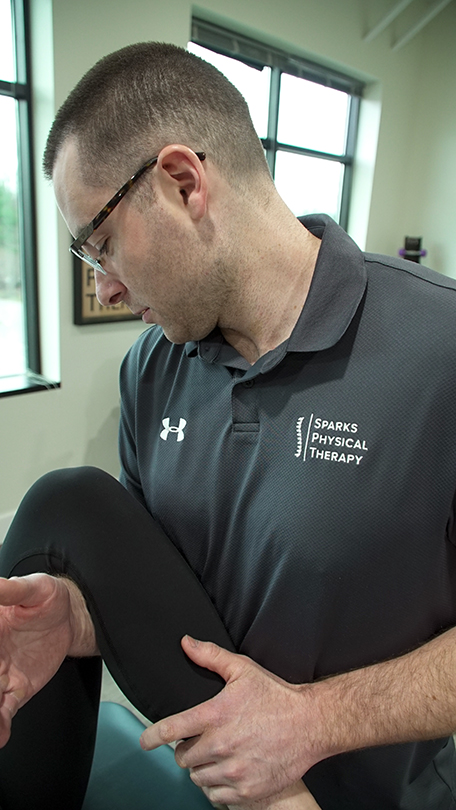
Physical therapist providing manual therapy to improve knee flexion range of motion.
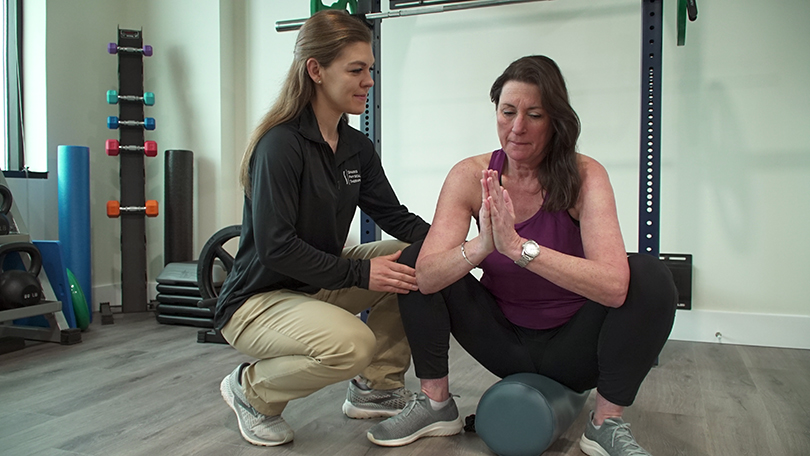
Physical therapist teaching a squat to improve knee mobility and strength.
Related Articles
Bedside Manner: How We Strive for Excellent Patient-Provider Relationships
When seeking medical care, it’s important to find a provider you trust and feel comfortable with. A strong patient-provider relationship not only makes the treatment process more enjoyable, but research has shown that building rapport leads to better outcomes.
Physical Therapy considerations for Pickleball Injuries
Pickleball is a fun and fast-growing sport that blends elements of tennis and ping pong. It’s designed to be low-impact, easy to learn, and accessible to people of all ages and skill levels. But like any sport, pickleball does come with a risk of injury. Fortunately, there are many tips and exercises that can help prepare your body for play and potentially prevent injuries from occurring.
Learn more about Squats
Squats are one of the most fundamental exercises in strength training—whether you’re an athlete training for a sport, someone looking to maintain or improve overall strength, or an older adult aiming to stay independent. Squats help improve both strength and mobility, and they’re highly functional in nature. This compound movement works multiple muscle groups, including the quads, hamstrings, glutes, and core, making it a highly effective full-body exercise. But proper form is key—not only to prevent injury but also to get the most out of each rep.