
ARTICLES
Pre-Surgical Physical Therapy in Patients Undergoing Total Knee Replacement
Total Knee Arthroplasty (TKA) is the preferred treatment for patients with end-stage knee osteoarthritis (OA), inflammatory arthritis, or osteonecrosis when pain and functional disability persist despite conservative treatments. Preoperative pain levels, physical fitness, and impairments are strong predictors of knee function after TKA. Better preoperative knee function and fitness contribute to a smoother and faster postoperative recovery.
Patients are often referred to physical therapy before surgery to complete pre-surgical rehabilitation aimed at reducing limitations and improving range of motion (ROM) and strength, which can enhance outcomes after surgery.
A systematic review examining the effects of pre-surgical rehabilitation found the following benefits in the preoperative period across eight trials:
- Strength improvements in 75% of studies
- Enhanced performance in functional tasks such as the Timed Up and Go (TUG) and Sit-to-Stand (STS) tests in 66%
- Increased range of motion in 50%
- Reduced pain levels in 66%
- Improved health-related quality of life (HRQOL) in 33%
No significant changes were noted in stair climbing or walking tests preoperatively. Postoperatively, six trials reported favorable short-term effects on knee function:
- One trial showed significant strength gains
- Two trials showed improvements in TUG and ROM
- One trial noted HRQOL improvements
- Two trials demonstrated reduced pain levels
These benefits were observed up to three months after TKA, supporting improved recovery. While these short- and mid-term benefits are promising, evidence on long-term maintenance remains limited and of low to very low certainty.
Both clinicians and patients may consider prehabilitation as a valuable strategy to enhance short- and mid-term recovery following total knee replacement.
Reference:
Granicher, Pascale, et al. Prehabilitation Improves Knee Functioning Before and Within the First Year After Total Knee Arthroplasty: A Systematic Review with Meta-analysis. Journal of Orthopaedic and Sports Physical Therapy, Vol. 52, No. 11, 2022.
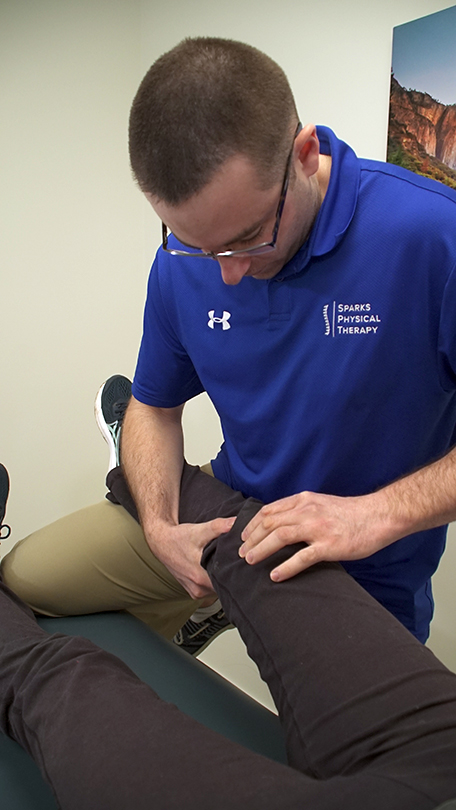
Physical therapist performing knee mobilizations.
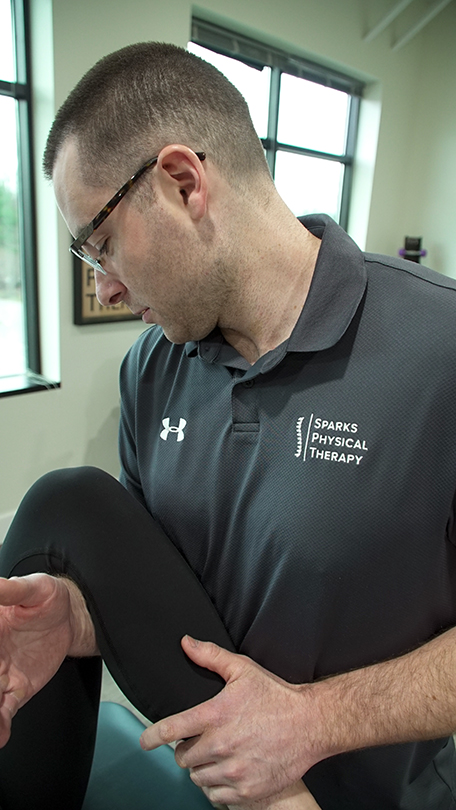
Physical therapist providing manual therapy to improve knee flexion range of motion.
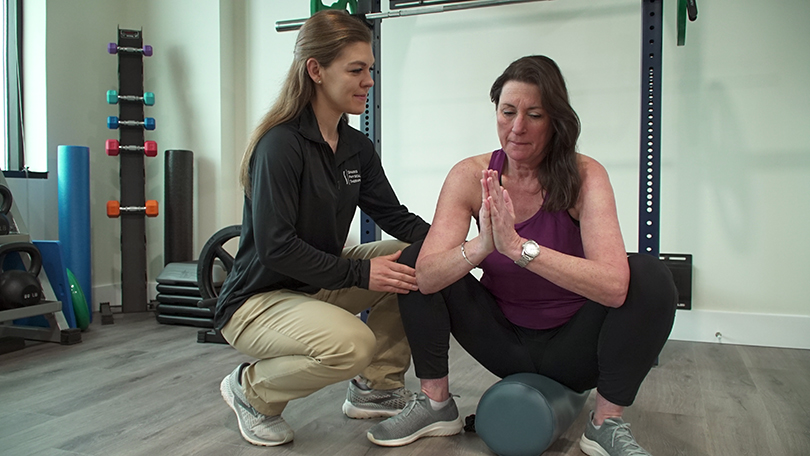
Physical therapist teaching a squat to improve knee mobility and strength.
Related Articles
Physical Therapy for Parkinson’s Disease
Parkinson’s disease is a progressive neurodegenerative disorder that affects the central nervous system by reducing dopamine production in the brain. It is the second most common neurodegenerative disease after Alzheimer’s and is believed to be caused by a combination of genetic and environmental factors. The incidence of Parkinson’s increases with age and is most commonly seen in individuals over the age of 65.
Parkinson’s Case – Case Report
Patient was a 69 year old male, who had been given a diagnosis of Parkinson’s disease approximately 4 years ago. He reports his initial symptom was tremors in his right hand, and later noticed some unsteadiness in his walking. He suffered a couple of falls prior to the start of physical therapy, both occurring on the stairs in his home, but sustained no significant injuries.
Rotator Cuff Tear – Case Report
The patient reported the sudden onset of left-sided neck pain approximately two weeks prior, with no identifiable mechanism of injury. She initially consulted her primary care physician and was prescribed a course of prednisone. Following this, she noted a significant decline in shoulder function, specifically an inability to raise her left arm overhead.