
ARTICLES
Neck Pain- Case Report
History: The patient presented with left-sided neck pain radiating to the left shoulder. She has a long-standing history of pain management due to chronic migraines and daily headaches, ongoing for several years. Previous interventions included cervical ablation and trigger point injections, which provided only temporary relief. Her headaches are typically located in the left suboccipital region and sometimes radiate to the area behind the left eye. Headaches occur more than five days per week. The patient works part-time as a physician assistant in various nursing home settings but does not perform any lifting or patient transfers.
Functional Limitations:
- Daily Headaches
- Sleeping is disturbed, waking up frequently with neck pain and headache
- Turning her neck while driving
Objective Measures:
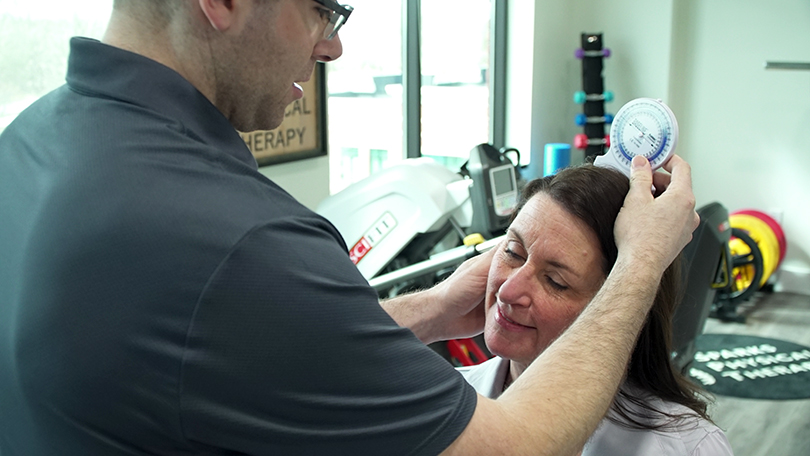
- Active range of motion- Forward Bending 50° Backward Bending 50° Right Rotation 55° Left Rotation 60° Right Side Bending 30° Left Side Bending 30°
- Myotomes- normal
- Dermatomes- normal
- Increased tone and suboccipitals and L>R upper trapezius
- Mobility testing- decreased cervical and thoracic segmental mobility
Treatment:
Manual Therapy
- Suboccipital release and soft tissue mobilizations to cervical paraspinals and B UT
- Dry Needling to suboccipitals, cervical paraspinals and UT
- Thoracic mobilizations and manipulations
- Cervical upglides and cervical CPA and UPA
Exercises
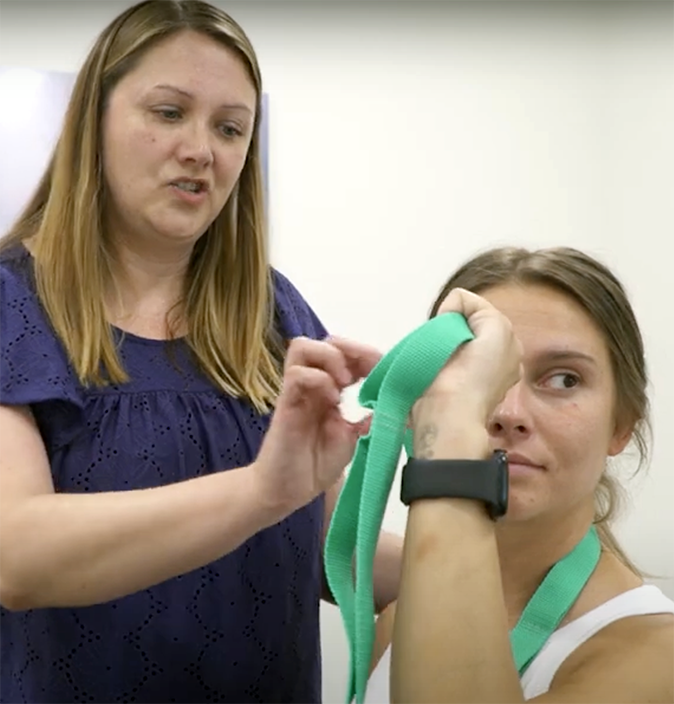
- Initiated with exercises to improve mobility including stretches (upper trapezius and levator scapula) and cervical self-mobilizations (cervical extension and SNAGs)
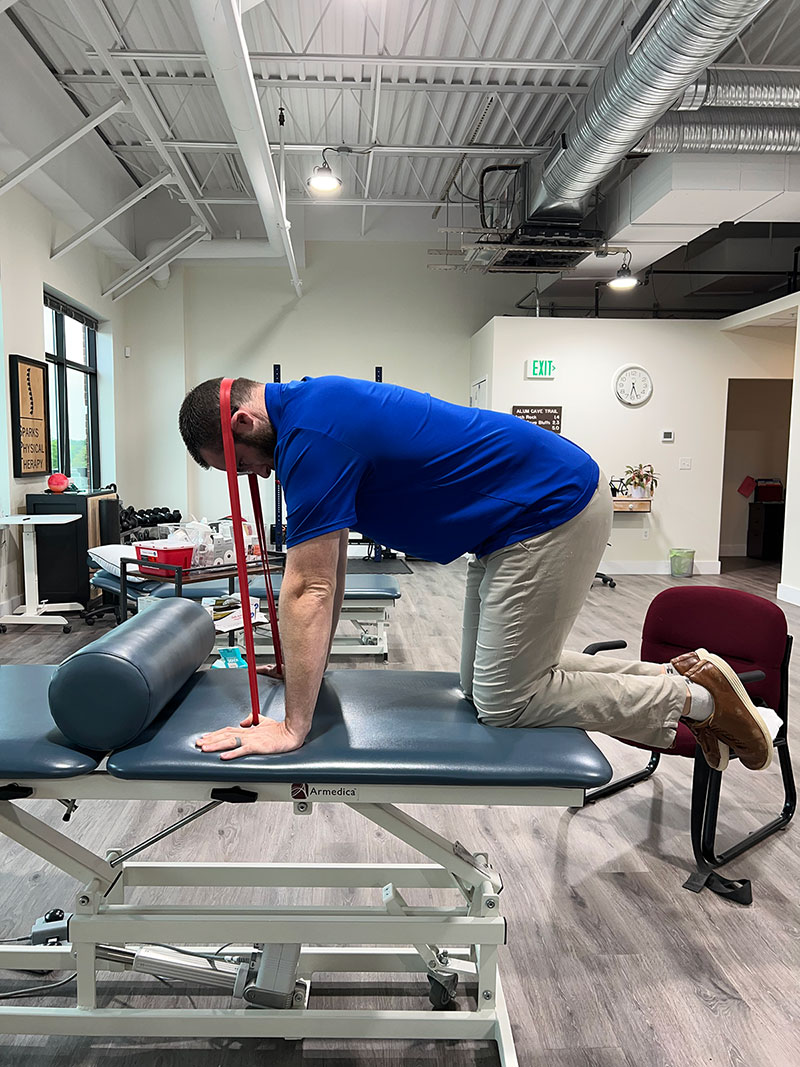
- Progressed with postural and cervical strengthening. Postural exercises included no money, scapular retraction and depression, shoulder extension, and rows. Cervical strengthening started with chin tucks and progressed with chin tucks with resisted band in both seated and quadriped position and supine chin tuck lift and hold
- Progression – Slowly moved away from dry needling after 6 visits as well as slowly moved away from manual techniques and placed greater focus on strengthening and stretching independently.
Results: The patient was seen for 14 visits over the course of 8 weeks, with a 2-week break during that time for travel. By the end of treatment, the patient reported pain levels of 2–3/10 at worst and noted she was able to sleep through the night without waking due to pain. Headaches had become rare, and when they did occur, the patient was able to effectively manage them with specific exercises she had learned during therapy. Cervical left rotation remained mildly limited compared to right, but both ranges had improved significantly. The patient reported no longer experiencing difficulty turning her head while driving. Overall, she expressed confidence in her ability to self-manage any remaining or recurring symptoms.
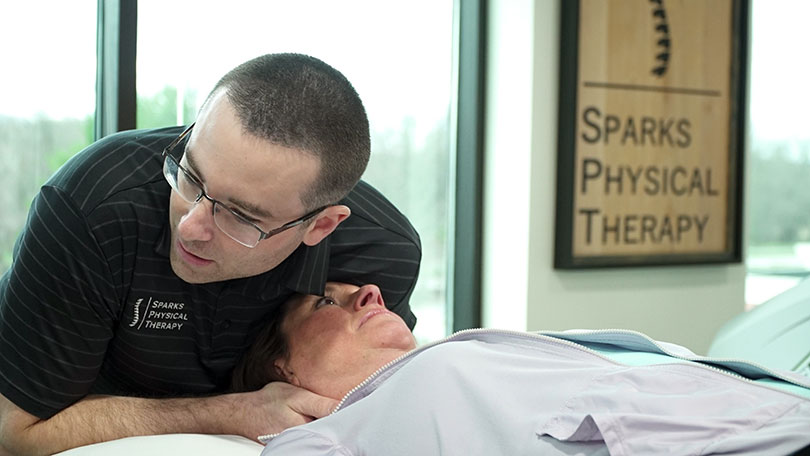
Manual therapy technique for the neck
Related Articles
Current Trends for Physical Therapy Management of Low Back Pain Based on Newest Clinical Practice Guideline
As research develops it guides our treatment for best practice and effective interventions to provide patients. These recommendations are compiled into Clinical Practice Guidelines which are meant to provide evidence-based guidelines for treating different diagnoses.
Physical Therapy for Lyme Disease
Treatment of Lyme disease and any co-infecting tick borne diseases will require a multi-disciplinary approach.
Exercise During Pregnancy
Is exercise safe during pregnancy? The answer for most women is YES!! In fact, The American College of Obstetricians and Gynecologists states, “If you are healthy and your pregnancy is normal, it is safe to continue or start regular physical activity.”