
ARTICLES
Can You Be Too Old for Pelvic Floor Physical and Occupational Therapy?
Many patients arrive at their first pelvic floor therapy evaluation feeling skeptical that their urinary incontinence symptoms can improve. For some, leakage with sneezing or coughing has been ongoing since childbirth; for others, symptoms began during menopause and gradually worsened. Even if referred by a urologist or primary care physician, many come with little confidence that pelvic floor therapy will help—especially if they’ve tried Kegels on their own without success.
The good news? Research shows that regardless of age, previous conditioning, or symptom severity, pelvic floor muscle training consistently improves incontinence symptoms! Pelvic floor therapy not only reduces leakage but also enhances pelvic floor muscle function, helping to prevent other conditions like pelvic organ prolapse.
Strengthening the pelvic floor causes real anatomical changes that enable these muscles to better support organs such as the bladder, uterus, and rectum. These benefits can be maintained with just a few exercises three times per week after completing an initial strengthening program—typically five times per week—guided by a pelvic floor therapist.
Studies demonstrate that pelvic floor muscle strengthening should be the first-line treatment for urinary incontinence, often outperforming surgery or medication.
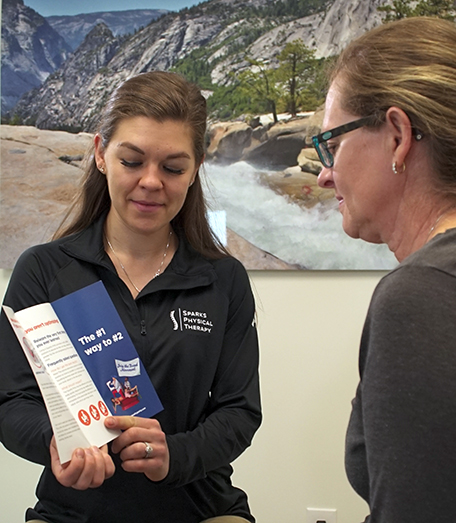
Pelvic floor physical therapist explaining the pelvic floor.
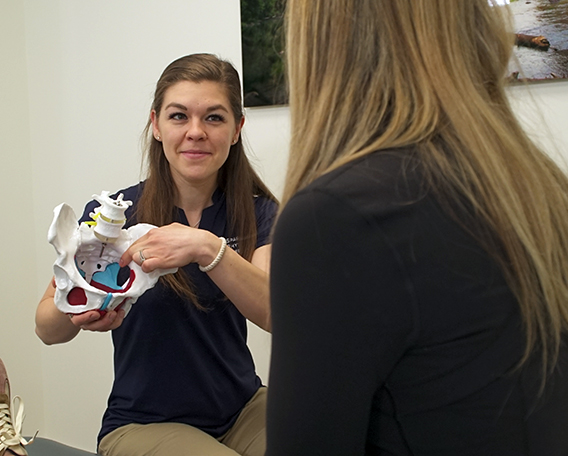
Pelvic floor therapist demonstrating techniques to manage symptoms.
Related Articles
Physical Therapy for Parkinson’s Disease
Parkinson’s disease is a progressive neurodegenerative disorder that affects the central nervous system by reducing dopamine production in the brain. It is the second most common neurodegenerative disease after Alzheimer’s and is believed to be caused by a combination of genetic and environmental factors. The incidence of Parkinson’s increases with age and is most commonly seen in individuals over the age of 65.
Parkinson’s Case – Case Report
Patient was a 69 year old male, who had been given a diagnosis of Parkinson’s disease approximately 4 years ago. He reports his initial symptom was tremors in his right hand, and later noticed some unsteadiness in his walking. He suffered a couple of falls prior to the start of physical therapy, both occurring on the stairs in his home, but sustained no significant injuries.
Rotator Cuff Tear – Case Report
The patient reported the sudden onset of left-sided neck pain approximately two weeks prior, with no identifiable mechanism of injury. She initially consulted her primary care physician and was prescribed a course of prednisone. Following this, she noted a significant decline in shoulder function, specifically an inability to raise her left arm overhead.