
ARTICLES
Can You Be Too Old for Pelvic Floor Physical and Occupational Therapy?
Many patients arrive at their first pelvic floor therapy evaluation feeling skeptical that their urinary incontinence symptoms can improve. For some, leakage with sneezing or coughing has been ongoing since childbirth; for others, symptoms began during menopause and gradually worsened. Even if referred by a urologist or primary care physician, many come with little confidence that pelvic floor therapy will help—especially if they’ve tried Kegels on their own without success.
The good news? Research shows that regardless of age, previous conditioning, or symptom severity, pelvic floor muscle training consistently improves incontinence symptoms! Pelvic floor therapy not only reduces leakage but also enhances pelvic floor muscle function, helping to prevent other conditions like pelvic organ prolapse.
Strengthening the pelvic floor causes real anatomical changes that enable these muscles to better support organs such as the bladder, uterus, and rectum. These benefits can be maintained with just a few exercises three times per week after completing an initial strengthening program—typically five times per week—guided by a pelvic floor therapist.
Studies demonstrate that pelvic floor muscle strengthening should be the first-line treatment for urinary incontinence, often outperforming surgery or medication.

Pelvic floor physical therapist explaining the pelvic floor.
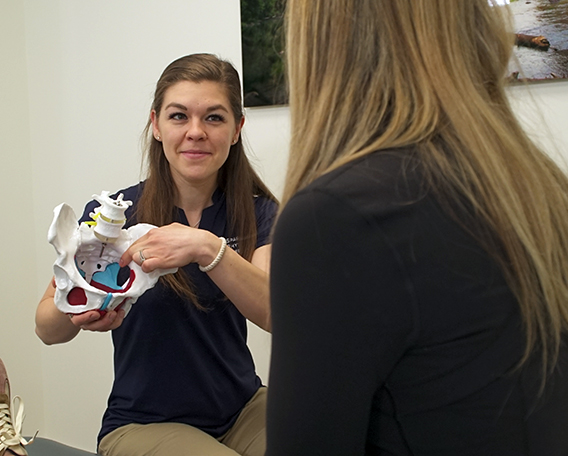
Pelvic floor therapist demonstrating techniques to manage symptoms.
Related Articles
Pelvic Floor PT/OT Interoception
Interoception is not a word that many people are familiar with, but it can be a key part in helping both adult and pediatric pelvic floor clients learn to address their pelvic floor symptoms and independently manage their pelvic floor needs during and after discharge from therapy.
Urinary Leakage and Incontinence
Urinary leakage and incontinence can occur for many different reasons. Some people leak urine in response to an increase in pressure in the abdomen either from a laugh, sneeze, or cough or from lifting, jumping, or running. Other people leak in response to a sudden, uncontrollable urge to urinate or a “bossy bladder.” As pelvic floor therapists, we treat and approach these kinds of incontinence differently.
Pelvic Floor PT/OT Diaphragm and Pelvic Floor Connection
The relationship between the pelvic floor and the diaphragm is often important when considering conditions like urinary incontinence, constipation, pelvic organ prolapse, and diastasis recti. When thinking about the abdomen like a canister, the pelvic floor is at the bottom of the canister and supports the abdominal contents and pelvic organs (rectum, uterus, and bladder) from the bottom.