
ARTICLES
Can You Be Too Old for Pelvic Floor Physical and Occupational Therapy?
Many patients arrive at their first pelvic floor therapy evaluation feeling skeptical that their urinary incontinence symptoms can improve. For some, leakage with sneezing or coughing has been ongoing since childbirth; for others, symptoms began during menopause and gradually worsened. Even if referred by a urologist or primary care physician, many come with little confidence that pelvic floor therapy will help—especially if they’ve tried Kegels on their own without success.
The good news? Research shows that regardless of age, previous conditioning, or symptom severity, pelvic floor muscle training consistently improves incontinence symptoms! Pelvic floor therapy not only reduces leakage but also enhances pelvic floor muscle function, helping to prevent other conditions like pelvic organ prolapse.
Strengthening the pelvic floor causes real anatomical changes that enable these muscles to better support organs such as the bladder, uterus, and rectum. These benefits can be maintained with just a few exercises three times per week after completing an initial strengthening program—typically five times per week—guided by a pelvic floor therapist.
Studies demonstrate that pelvic floor muscle strengthening should be the first-line treatment for urinary incontinence, often outperforming surgery or medication.
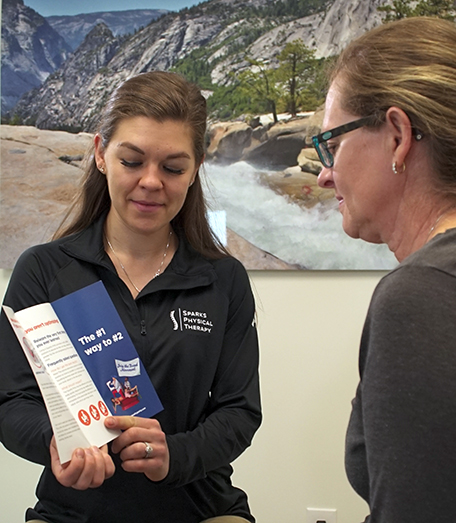
Pelvic floor physical therapist explaining the pelvic floor.
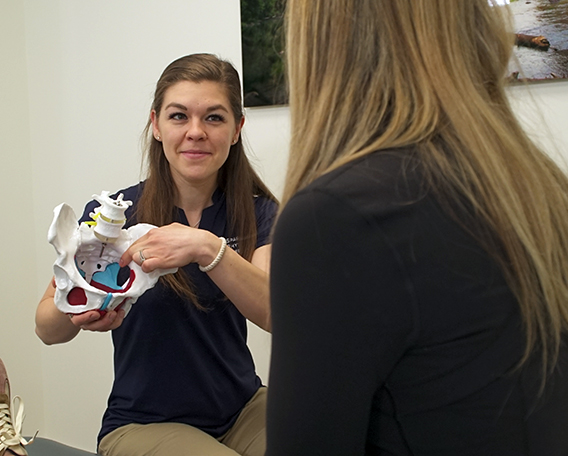
Pelvic floor therapist demonstrating techniques to manage symptoms.
Related Articles
A Patient with Lumbar Spinal Stenosis – A Case Report
The patient presents with a 20-year history of intermittent low back pain, which has gradually worsened over the past four months to include sharp, radiating pain down both legs to the toes. Radicular symptoms are slightly worse on the right side. Symptoms are aggravated by standing and walking, while sitting provides complete relief of leg pain.
Nutrition Needs for Concussions
Ouch! Ever get hit too hard during a sports practice or game and hurt your head? Many contact sports, such as lacrosse, football, or soccer, have higher incidences of concussions. These concussions are classified as mild traumatic brain injuries. A concussion occurs due to a hit or blow to the head, where the brain is rocked back and forth in the skull. Due to this movement, nerve cells in the brain need to work harder to recover, therefore using up more energy. Concussions can also lead to increased inflammation and stress in the body.
Vestibular Case Report
The patient reported experiencing increased dizziness following a recent sinus infection. Initially, she had a few days of congestion, after which the dizziness began.